
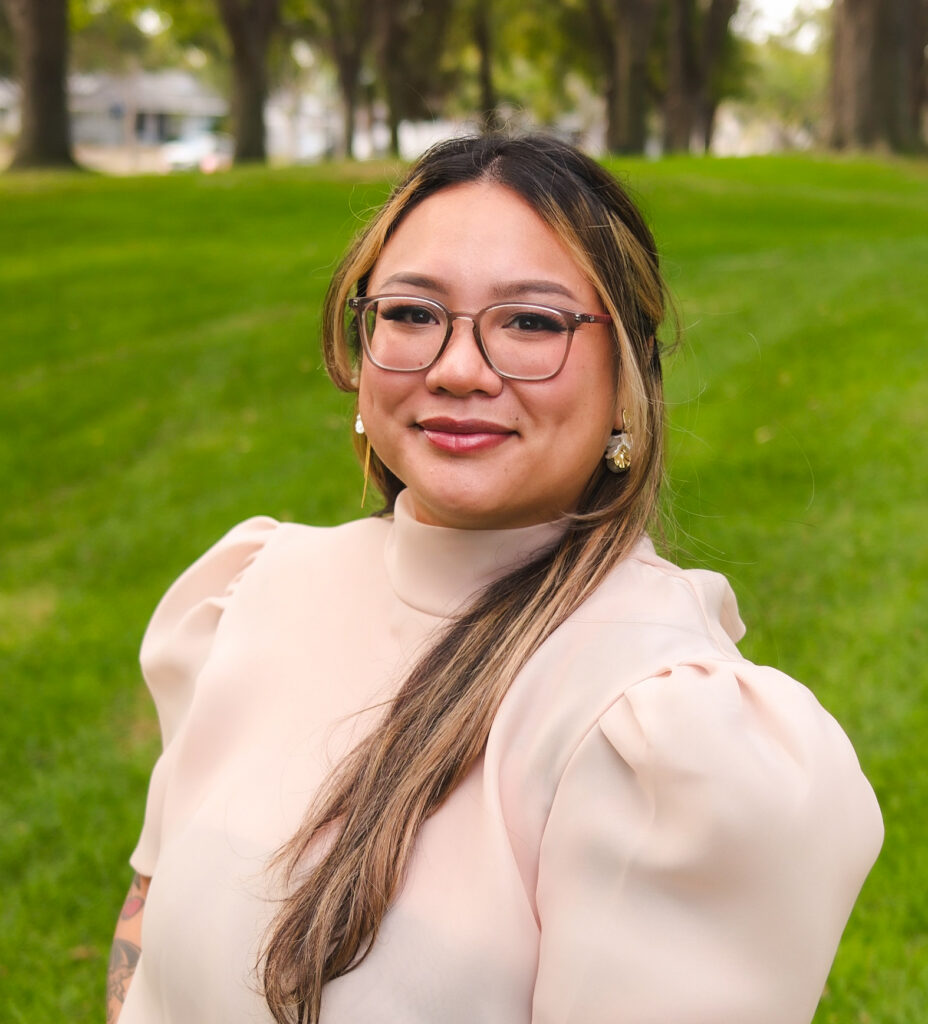
Enrika Manalo, MSW
Individual Adult Therapist
I work with individuals who are seeking support in their experiences with trauma, grief and loss, immigrant issues, and identity issues in any season of their adult life. Whether you are entering therapy for the first time, trying therapy again, or seeking a new therapist in this particular season of your life, you are welcome here! (If you’ve been reading therapist profile after profile for the past hour, take a break before reading on.)
Location: Manhattan Beach,Online
Language: English
Fee: $175
Sliding Scale: Available
Insurance: Cigna, Aetna, Optum/UnitedHealthcare, Anthem Blue Cross, Curative, & can provide superbill for PPO plans
Accepting New Clients: Yes
Populations:
- Adults
Specialties:
- Anxiety & Stress Management
- Asian American and Asian Immigrant Therapy
- Depression
- Grief & Loss
- Identity
- Trauma & PTSD
Hello! I’m Enrika.
My journey to becoming a therapist has been shaped by my curiosity, lived experience, and a deep commitment to social justice and my community. I identify as a Filipina-American, the eldest daughter of immigrants, neurodivergent, and disabled. My experience with these intersecting identities, along with my education in public health and social work, and my clinical training, inform the way I show up as a therapist. I continue to stay curious about engaging in meaningful, intentional work in a world that is complicated and difficult to navigate. It deepens my empathy and compassion, and allows me to cultivate a therapeutic space where you hopefully feel safe enough to exist as you are and brave enough to explore, heal, and grow with compassion and kindness.
My practice is shaped by my work with adolescents and adults who have been impacted by mental health struggles, trauma, academic and work-related stress, grief and loss, shame, life transitions, family and relationship issues, identity issues, substance use, incarceration, homelessness, suicidal ideation, disability, and systems of oppression.
Working With Me
My approach in therapy is informed by a culturally-responsive, relational, and affirmative lens. There isn’t just one way of doing therapy, and I’ll tailor your care to your specific needs. Therapy works best on a foundation of collaboration and trust, and my goal is to work with you to create a space that honors your experiences and pain, and empowers you to live a life that is sustainable and aligned with your values, identity, and truth. Together we’ll bring awareness to the factors that impact your life, develop practical tools to care for yourself and your relationships, explore difficult memories and experiences, and learn to express complex emotions.
Therapy for Trauma
Trauma manifests in many forms such as acute, chronic, individual, developmental, workplace, vicarious, intergenerational, and historical trauma. The nervous system takes a toll after experiencing or witnessing traumatic events and environments, and you may feel symptoms of anxiety, depression, dissociation, hypervigilance, and intrusive thoughts, just to name a few. It can be exhausting and too much to carry alone. Sometimes you can’t even access these memories as your brain tries to protect you, yet your body stays in survival mode. We can start on what experiences have been affecting your life and relationships, how it’s changed your habits and thoughts, and where you want to go from there.
I am EMDR trained and offer EMDR therapy, a form of therapy that involves phases of recalling and reprocessing memories using bilateral stimulation to help you heal from disturbing experiences and feel relief from trauma symptoms.
Therapy for Grief and Loss
Grief can take many forms. You might experience it with relationships like with the death of a loved one; the loss of an important community figure; mourning the loss of a relationship; the inability of caregivers to meet your needs even as an adult; the potential of a relationship; the loss of a community after setting boundaries and choosing a different path; or even when taking on a new role (e.g. parent, caregiver, supervisor, etc.) and mourning the change in your relationships.
You might experience it when navigating other life transitions and daily life, such as in receiving a late ADHD/Autism diagnosis and mourning the years of struggling without understanding or receiving support; having chronic illnesses/disabilities and experiencing continuous, ambiguous losses; coming out and mourning missed milestones and relationships; mourning who you used to be and roles you once held; or being the only one to survive a traumatic event and navigating the aftermath.
You might experience it within your environment like witnessing changes in your community; returning to your community to find it transformed and people unfamiliar; witnessing injustice in all forms and mourning for others; or even in experiencing a sense of detachment from the world.
It’s now widely known that grief looks different for everyone. Let’s understand and hold your experiences with it together, explore the depths of these complicated feelings, and gently move towards a place of compassion and healing.
Therapy for Immigrant Issues
Every immigrant or child of immigrant experience is unique even though we have similar experiences. These similar experiences allow us to connect and find community in our struggles. When you come from a collectivist culture, adapting to a Western, individualistic culture often brings moral injury. Not only are you navigating the systems and institutions of a society that differs from your family, but you are also navigating your own family system and values. Maybe you experience a constant loop of conflict with your immigrant parents, struggle to honor your culture while integrating habits and communication styles of the one you learned in school/work, feel frustration towards your family for being unable to accept you as you are, feel guilt for wanting to something different than what your parents expected of you, or prioritize the collective to a point where you are losing yourself and neglecting your needs. Together we’ll explore your unique immigrant experience, gain the ability to set culturally informed boundaries, and learn to understand your needs and trust your ability to take care of yourself.
Therapy for Identity Issues
What does it mean for you to be in the body you’re in with the identities you hold? How does your culture, religion, gender identity, gender expression, sexual orientation, relationships and environment impact your relationship with yourself? You might spend this time in therapy trying to figure out the language to define yourself or trying to redefine yourself and explore what it means to be you. Throughout this process, you deserve a space to be curious about who you are and who you want around you, and figure out how you want to live your life. Having a deeper understanding of yourself is an important step in being able to work through the other parts in your life that need to be addressed.
There isn’t a singular way to identify or look Filipino, Filipina, Filipinx-American. From exploring and defining my own identity in the community, I learned that everyone in our community has a unique experience that simply can’t be put in one box. One person and family might identify with one or multiple ethnolinguistic groups from the Philippines, or with multiple cultures that includes the Filipino culture. Some people are more religious while others are more spiritual and integrate more indigenous practices. Some people might have had more proximity to the community, while others’ proximity was, at most, their family. Some people might experience a deep sense of belonging in the community, while others don’t, or don’t feel like they’re “Filipino enough” to belong. Some people might have sensitivities to certain foods/flavors and refuse to eat it, and that is okay! In varied capacities, we grapple with the relationship with ourselves, our family, and our community, on top of navigating our own mental well-being. My practice is rooted in and inspired by the core concept of kapwa which encompasses our shared humanity and interconnectedness. Together, we can explore your experiences with curiosity, compassion, and care; and learn to trust your own inner wisdom to define what is best for you.
It takes courage to advocate for your needs and put yourself first by seeking mental health support. If you’re looking for therapy that honors your story, values, and experiences, I would be honored to work with you.
Registered California Board of Behavioral Sciences Number: ACSW 126395
Supervised by Brigitte Ly, LCSW 77077