
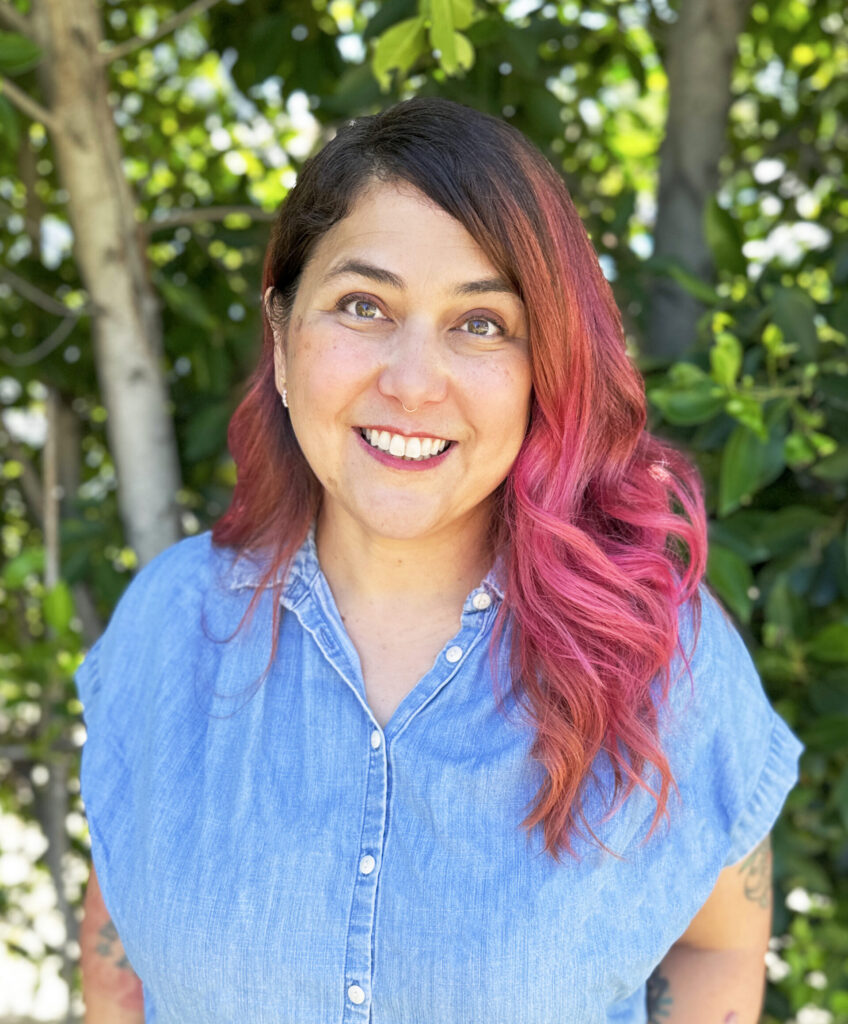
Leilani Francisco-DeLay, MSW
Child, Teen, & Adult Therapist
I help children, adolescents, and adults navigating anxiety, trauma, neurodivergence, and the complexities of multiracial identity heal, grow, and cultivate a more meaningful life through a relational, neurobiology-informed approach grounded in curiosity, creativity, mindfulness, and somatic practices.
Location: Burbank,Online
Language: English
Fee: $175
Sliding Scale: Available
Insurance: Cigna, Aetna, Optum/UnitedHealthcare, Anthem Blue Cross, Curative, & can provide superbill for PPO plans
Accepting New Clients: Yes
Populations:
- Adults
- Children
- Teen
Specialties:
- ADHD
- Anxiety & Stress Management
- Autism
- Multicultural Identity
- Pregnancy & Postpartum
Hi, I’m Leilani!
As a multiracial Filipino American therapist, neurodivergent woman, and mother to a neurodivergent child, I understand that our identities, relationships, and lived experiences profoundly shape how we experience ourselves and the world. Before becoming a therapist, I worked professionally as a musician and actor, where I witnessed how storytelling, creativity, and lifelong play can help us better understand ourselves, make meaning of difficult experiences, and foster healing. Becoming a mother transformed my understanding of mental health. Living through the joys, challenges, and profound identity shifts of parenthood inspired me to pursue social work and deepened my commitment to supporting others with compassion, curiosity, and hope.
I enjoy working with children, adolescents, and adults, with a particular interest in supporting individuals with neurodivergent identities and caregivers as they transition into parenthood. I earned my Master of Social Work from California State University, Northridge, where I received training in community mental health. During my clinical training, I worked with children, adolescents, and adults experiencing complex trauma, anxiety, depression, grief, attachment challenges, and foster care involvement. My work is grounded in relational, trauma-informed, and neurobiology-informed care, recognizing that healing can happen through conversation, creativity, play throughout the lifespan, mindfulness, and reconnecting with the wisdom of both the mind and body.
Working With Me
I recognize that many of us are doing our best to navigate a world that doesn’t always honor our humanity, our relationships, or the many ways we experience and move through the world. We are shaped by our identities, families, cultures, communities, and the systems we live within. My hope is that therapy becomes a place where you feel deeply seen, supported, and understood. A place where you can make sense of your experiences, reconnect with yourself, your strengths, and the people, values, and communities that help you feel grounded, while rediscovering a deeper sense of connection and belonging.
I believe therapy is a collaborative relationship built on compassion, authenticity, trust, and attunement. Together, we’ll make space to wonder about the experiences that have shaped you, honoring both the pain you’ve carried and the strengths, relationships, traditions, and sources of meaning that have sustained you along the way. I don’t believe there is one right way to heal because no two stories are the same. My work is rooted in a relational, trauma-informed, and neurobiology-informed approach that recognizes healing happens through connection with ourselves, with others, and with our communities. Depending on your needs, our work may include conversation, creativity, play throughout the lifespan, mindfulness, somatic practices, and making meaning of the stories we carry across generations. I believe healing isn’t only about understanding what has been passed down to us, but also about choosing what we want to carry forward with intention for ourselves and for future generations.
Therapy for ADHD, AuDHD, and Autism
I believe there are many ways to experience and move through the world, and that neurodiversity is a natural part of the human experience. Whether you’re a child, adolescent, adult, or parent, living in a world that wasn’t designed with your brain in mind can sometimes leave you feeling misunderstood, exhausted, or wondering why life seems easier for everyone else. Too often, neurodivergent people are asked to adapt to environments that haven’t adapted to them. Over time, that can shape the way we see ourselves, our relationships, and where we feel we belong.
As a neurodivergent therapist, I approach this work through a neuroaffirming, relational, and strengths-based lens. It’s important to me that therapy feels like a place where you don’t have to mask, explain, or apologize for the ways you experience the world. Together, we’ll wonder about your experiences, make sense of the ways you’ve adapted, and explore the relationships, environments, and supports that help you feel most like yourself. Whether we’re working with the challenges of everyday life, navigating a new diagnosis, supporting your child, or exploring your identity, my hope is that therapy helps you better understand yourself with compassion, honor your needs, and build a life where you experience greater connection, belonging, and joy.
Therapy for Anxiety
Anxiety doesn’t always announce itself. At times, it can be loud, showing up as racing thoughts, constant worry, perfectionism, difficulty slowing down, or a nervous system that never seems to have a chance to settle. But sometimes it is quiet, living just beneath the surface, shaping the way we think, relate to ourselves, and experience the world around us. Anxiety can become so familiar that we begin to believe it’s simply who we are. Whatever form it takes, anxiety can make the world feel smaller and leave us wondering why it feels so difficult to simply be.
My own experiences with anxiety continue to shape the way I understand myself, others, and the work of therapy. I don’t believe anxiety exists in a vacuum. It can be shaped by neurodivergence, trauma, relationships, major life transitions, systemic pressures, or countless other experiences that influence the way our nervous systems learn to respond to the world. Together, we’ll slow down enough to make sense of your anxiety, honoring the ways your mind and body have worked to protect you while gently exploring new ways of finding safety, connection, and ease. Through mindfulness, self-compassion, exploring your personal story, and developing a deeper understanding of your nervous system, my hope is that you’ll begin to trust yourself more fully, reconnect with what matters most, and create more space for presence, joy, and the people and experiences that bring meaning to your life.
Therapy for Pregnancy and Postpartum
Becoming a parent doesn’t simply ask us to care for a child. It asks us to become someone new. Alongside the joy, love, and hope that can come with welcoming a child, many parents also experience identity shifts, relationship changes, anxiety, grief, and moments of wondering whether they’re enough. The truth is that parenthood is both beautiful and incredibly hard, yet so many people feel pressure to carry those experiences quietly or believe they’re the only ones struggling. You deserve a space where every part of that experience is welcome.
My experiences as a mother shape how I show up for the parents I work with. I believe becoming a parent can be one of the most profound transitions we experience in life, inviting us to reflect not only on the kind of parent we hope to be, but also on the relationships, experiences, and stories that have shaped us. Parenthood has a way of opening old wounds, bringing unexpected emotions to the surface, and inviting us to revisit our own stories with greater compassion and understanding. Together, we’ll make sense of your experiences, strengthen your connection with yourself and the people you love, and thoughtfully explore what you hope to carry forward as you build your family. My hope is that therapy becomes a place where you feel supported through the challenges, celebrate the joys, and remember that caring for yourself is an important part of caring for your child.
Therapy for Multiracial Identity
There are many ways to belong, and no one way to experience being multiracial. Growing up in a multiracial family can be deeply meaningful while also bringing questions about identity, ancestry, and where we feel most at home. Many multiracial individuals spend years navigating assumptions, code-switching, or feeling like they need to explain, defend, or simplify parts of who they are. Others wonder if they’re “enough” of one culture or another, or find themselves longing for a deeper connection to their heritage. These experiences are often subtle, difficult to name, and rarely talked about, yet they can profoundly shape the way we understand ourselves, our relationships, and our place in the world.
As a multiracial Filipino American therapist, my identity informs my work and shapes my understanding that every person’s story is unique. Together, we’ll reflect on the experiences that have shaped your identity, making space for both the questions you hold and the strengths, stories, and traditions you carry. For some, that may include reconnecting with your ancestry, culture, language, or traditions. For others, it may mean intentionally reclaiming, reshaping, or creating traditions that honor your heritage in a way that is unique to you, your relationships, and the community you want to cultivate. My hope is that therapy becomes a place where you can embrace the power and complexity of your identity with greater acceptance, allowing you to move through the world with
confidence in every part of who you are. I grew up in a multiracial Filipino American family in the United States, where both English and Tagalog were spoken in my home. While I only speak English, I understand the unique experience of growing up connected to multiple cultures while navigating language, identity, and belonging in different ways across generations.
About Me
Making things is my happy place. You’ll usually find me singing, playing the piano, painting, carving linocut prints, baking for the people I love, or finding just about any excuse to get crafty. I’ve always loved working with my hands, and I tend to collect hobbies almost as quickly as ideas, so I’m usually in the middle of learning something new or enthusiastically starting another creative project.
When I’m not in the craft zone, I love spending time with my husband and daughter, wandering through museums, being out in nature, and disappearing down the occasional research rabbit hole.
Courage brought you here, and it would be an honor to support you as you build a life that feels meaningful, connected, and authentically yours.
Registered California Board of Behavioral Sciences Number: ASW 139412
Supervised by Sudheera Ranaweera, LP#350